Address
804, 805, 8th Floor, Tower B4, Spaze I Tech Park Sec-49, Sohna Road, Gurgaon-122018 , Haryana, India.
Download Alpha Portfolio App


Download Consolidated Portfolio App
Social Media



By Alpha Research
May 07, 2026


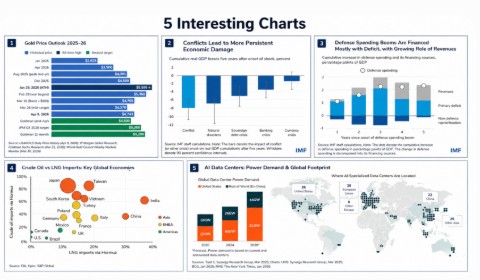
The use of AI has moved beyond experimentation to becoming essential infrastructure, made possible through an enormous increase in investment spending Big Tech will be responsible for investing close to $600 billion in 2026 compared with less than $100 billion before 2020. This is not simply hype but rather a structural shift where AI is integrated into the routine operations of a company, leading to increased productivity and reduced operational costs.
However, the greater significance of AI is its economic implications, which include lower intelligence costs, more efficient firms, increased competition, and emerging business opportunities. The benefits are increased productivity and economic growth, while the downside is if job creation cannot match job destruction fast enough due to falling income levels and reduced consumption.
Is the AI Trade Getting Overheated?
AI is supported by real usage and real earnings, but valuations and spending have moved ahead of the actual earnings and fundamentals. It looks more like a phase of overheating in parts of the market, not a full-blown bubble.
AI is not in a traditional bubble because earnings, revenue growth, and adoption are genuinely strong across hyperscalers and chipmakers. However, valuations and capex assumptions have moved ahead of reality, with markets pricing near-perfect execution of AI monetisation for years ahead. This creates a late-cycle setup where the risk is not AI failing, but expectations slowing down relative to how aggressively capital has already been deployed.
What Could Lead to a Repricing in AI Markets?
The current momentum behind AI lies in solid earnings momentum (~27% S&P earnings growth) and fast AI-based revenue growth (cloud growth at 30-60%), but the weakness lies in the assumptions inherent in the forecasted future growth trajectory.
The whole AI investment thesis is predicated on four factors for continued growth:
A deviation from any of these four assumptions capex growth slowing down in the case of Big Tech, revenues moderating from their hyper-growth trajectory, tighter financial conditions as reliance on borrowing and private markets increases, or the loss of concentration in terms of a few stock driving the indices will lead to more than just a weakening in sentiment, but also a mechanical revaluation of the whole US equity market due to its concentration (index concentration of ~40%).
India’s Position in a Global AI Correction
India’s positioning within the global AI economy is distinct in that India is not directly involved in the investment bubble associated with the AI industry, yet it is significantly linked to the bubble via its trade relations and profit exposure. Consequently, India takes on a role that is more characteristic of an intermediary transmission market than a risk market.
Unlike the US or Taiwan, India does not have a concentrated exposure to AI infrastructure or semiconductor manufacturing. There is no equivalent of Nvidia or OpenAI in the listed ecosystem. As a result, India is not priced on AI expectations in the same way global tech markets are.
The Indian market is structurally anchored in:
This makes India less sensitive to global AI capex cycles and more driven by internal earnings momentum.
While India will not be immune to global shocks, its earnings base is structurally more domestic and diversified compared to AI-heavy markets like the US.
This creates an interesting dynamic:
A potential AI bubble correction in global markets would not represent a breakdown of technology, but a re-rating of expectations around growth, capex, and profitability in US tech-heavy indices. The impact on India would be indirect, not structural, and would transmit primarily through two channels: global capital flows and IT sector earnings sensitivity to US technology spending.
India’s equity market is relatively insulated at the core level due to its diversified earnings base, which is driven more by domestic consumption, banking, and infrastructure than by AI-linked revenues. However, in the short term, it would not be immune to volatility. Indian IT services, given their dependence on North American tech budgets, would be the most directly impacted segment, facing slower deal flows and valuation compression if US AI spending moderates. At the same time, foreign investor outflows during global risk-off phases could lead to temporary pressure across broader markets, even if domestic fundamentals remain stable.
Importantly, this does not represent a structural threat to India’s long-term growth story. Instead, it reflects a transition in global capital allocation, where AI-heavy markets may experience sharper corrections while relatively diversified economies like India tend to be more resilient on a relative basis.
Best Regards
Sakshi Rawat | Neeru Seal
Research Analyst| Partner
Team Alpha Capital
Disclaimer: This report is for informational purposes only and does not constitute investment advice, a recommendation, or an offer to buy or sell any financial instrument. The information is based on publicly available sources believed to be reliable, but accuracy and completeness are not guaranteed. Views expressed are subject to change without notice. Investors should conduct their own due diligence and consult a qualified financial advisor before making investment decisions.