Address
804, 805, 8th Floor, Tower B4, Spaze I Tech Park Sec-49, Sohna Road, Gurgaon-122018 , Haryana, India.
Download Alpha Portfolio App


Download Consolidated Portfolio App
Social Media



By Alpha Research
Mar 07, 2026


On the morning of June 28, 1914, the assassination of Archduke Franz Ferdinand in Sarajevo barely registered as a global economic event. Financial markets continued trading normally. Investors viewed it as yet another political disturbance in an unstable region.
Within weeks, Europe was at war. The world was witnessing WW1. The London Stock Exchange, then the financial centre of the world, was forced to shut down for five months, the longest closure in its history. Trade routes collapsed, currencies broke their gold pegs, and capital flows were permanently redirected. The investors of 1914 learned a harsh lesson: Geopolitics can reshape markets far faster than economics can explain them.
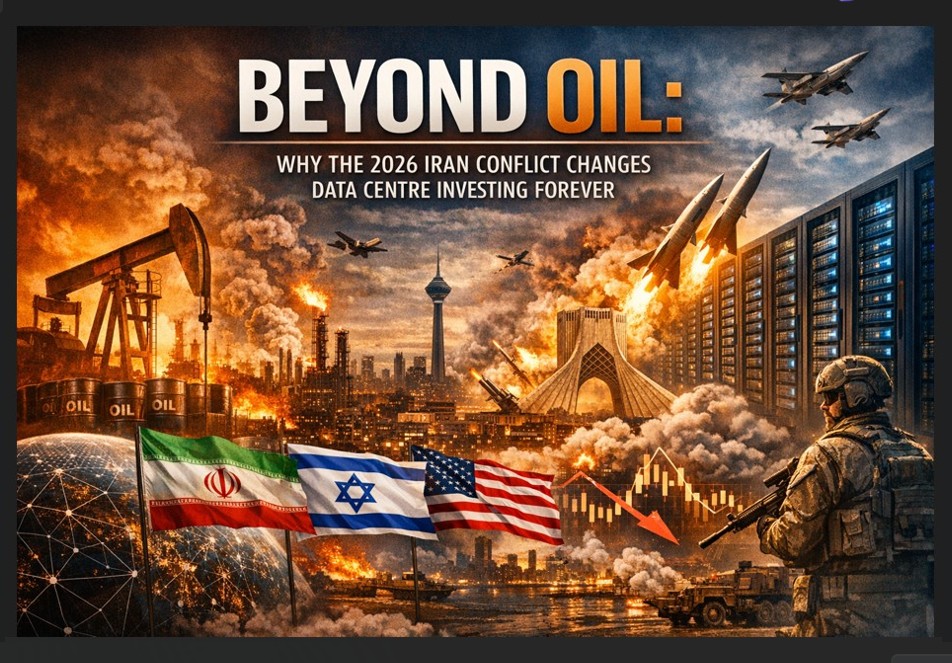
Today, markets appear to be entering another such period. Wars in the Middle East, tensions around Taiwan, the Russia–Ukraine conflict, and the intensifying technological rivalry between the United States and China are not isolated disruptions. They represent a structural shift in the organisation of global economic power. For investors, this marks the transition from a globalisation-driven market regime to a geopolitics-driven one.
If I could answer the 'How' question, it would mean I could predict; I cannot. All we can do is to be better prepared and understand that markets fear uncertainty more than conflict itself.
The Thesis: Markets are moving from Efficiency to Security
For nearly three decades after the Cold War, global markets operated under a simple organizing principle: efficiency. Manufacturing moved wherever labour costs were lowest. Supply chains stretched across continents. Energy moved relatively freely. Capital chased cost advantages.
The outcome was powerful: global inflation declined, emerging markets industrialised rapidly, and multinational technology firms scaled across borders. But this system depended on a fragile assumption: geopolitical stability. Once that stability began to fracture through trade wars, sanctions, pandemics, and military conflicts, the global system started to reorganize. Global trade as a share of GDP peaked around 2008 and has remained largely stagnant since.
What economists once called hyper-globalization has quietly stalled.
In my understanding, competition between nations increasingly revolves around three strategic systems:
Energy systems
Compute systems
Resource systems
Countries that dominate these systems will shape the next phase of economic power—and capital flows tend to follow power. Understanding this map allows investors to translate geopolitical tensions into investment opportunities.
1) ENERGY:
For much of the past two decades, investors treated geopolitical shocks as temporary disturbances. Markets typically recovered quickly after crises. A Carson Group study analyzing 40 geopolitical shocks over 85 years found that the S&P 500 historically falls by only about 0.9% in the first month after a geopolitical event, before recovering roughly 3.4% over the following six months. But this pattern holds primarily when core economic systems remain intact.
When global energy supply, trade routes, or financial infrastructure are threatened, market behavior changes dramatically. Global trade still depends on a handful of maritime chokepoints:
Together, these routes carry more than half of global seaborne trade.
During the 1956 Suez Crisis, Egypt blocked the Suez Canal, through which nearly two-thirds of Europe's oil supply flowed. Tanker markets seized up almost immediately, sending energy prices sharply higher. The 1973 Arab oil embargo quadrupled oil prices and triggered an inflation shock that reshaped global economic policy. When the container ship 'Ever Given' blocked the Suez Canal in 2021, it disrupted nearly $10 billion of trade per day.
Today, the Strait of Hormuz carries roughly 20% of global oil supply, making it the most important maritime chokepoint in global energy markets. Geography remains the ultimate driver.
2) COMPUTE:
Yet the energy story today has acquired a new twist: artificial intelligence. Training advanced AI models requires enormous computing infrastructure, and data centres consume vast quantities of electricity. Some projections suggest AI data centres could consume nearly 10% of U.S. electricity by 2030.
The implication is striking. The AI revolution may ultimately be constrained not by algorithms, but by electricity. This convergence between AI and energy infrastructure could transform traditionally slow-growth sectors, utilities, power transmission networks, and nuclear energy into strategic assets.
Technological competition between major powers increasingly resembles the nuclear rivalry of the Cold War. Semiconductors are now the foundational technology of modern economies. Advanced chips power everything from smartphones to missile guidance systems. The geopolitical stakes are enormous.
Taiwan produces more than 90% of the world's most advanced semiconductors, making it one of the most strategically sensitive nodes in the global economy. Governments across the United States, Europe, China, and India are investing hundreds of billions of dollars to build domestic semiconductor ecosystems. But the real investment opportunity lies beyond the chipmakers themselves. Artificial intelligence requires:
3) RESOURCE:
For decades, supply chains were optimized for efficiency. But geopolitical tensions have revealed the risks of concentrating production in a few locations. Companies are now prioritizing resilience. Concepts such as friend-shoring, near-shoring, and supply chain diversification are increasingly central to corporate strategy. Countries like India, Vietnam, and Mexico are emerging as alternative manufacturing hubs.
History provides an interesting analogy. In the nineteenth century, the expansion of railways created enormous investment opportunities—not only in rail companies themselves but in steel, coal, engineering, and banking. Similarly, the reconfiguration of global supply chains today is likely to create investment opportunities across logistics, infrastructure, and manufacturing ecosystems.
The twenty-first century may revolve around critical minerals. Copper, lithium, nickel, and rare earth elements are essential for electric vehicles, renewable energy systems, and advanced electronics. China currently controls a large share of global rare earth processing. This concentration has triggered a strategic response from Western governments seeking to build alternative supply chains. This competition could evolve into a critical minerals supercycle.
(May like to read: https://www.alphacapital.in/
One of the most intriguing developments in financial markets is the rise of prediction markets such as Polymarket and Kalshi. These platforms allow participants to trade on the probability of geopolitical events—from ceasefires to election outcomes.
Recently, wagers on geopolitical developments surged into the hundreds of millions of dollars in weekly trading volume. Unlike traditional financial markets, which react after events occur, prediction markets often price probabilities before information becomes public.
For investors, these markets represent a new information layer—a real-time aggregation of global expectations. Ignoring them today may be equivalent to ignoring bond markets when analyzing macro risk decades ago.
India's Strategic Opportunity
Geopolitical fragmentation creates not only risks but opportunities. Few countries are positioned to benefit from supply chain realignment as strongly as India. As corporations diversify manufacturing away from concentrated production hubs, India is emerging as a key alternative for electronics manufacturing, industrial production, and logistics infrastructure. Three sectors appear particularly well-positioned:
Defense manufacturing
Global military spending has crossed $2.4 trillion annually, and India's push for defense self-reliance is creating a multi-decade opportunity for domestic firms.
In my July 2025 article Arming Growth: India's Defence Sector, I argued that the industry was entering a multi-decade expansion phase. Since then, several developments have reinforced this thesis.
India's 2026 budget allocated ₹6.8 lakh crore to defence, representing a double-digit increase. Meanwhile, the Nifty India Defence Index rose 21% during 2025 and gained another 6.4% in February 2026. The significance of this validation is not self-congratulation. The more relevant question is what comes next. Investors who missed the first phase of this structural trade can still participate, but with greater discipline. Valuations have tightened, and entry points now require careful consideration.
Energy infrastructure
AI-driven electricity demand and industrial expansion are accelerating investment in power generation and grid infrastructure.
Industrial supply chains
Logistics, ports, and industrial corridors stand to benefit as global manufacturing networks reorganize. In geopolitical cycles, economic power tends to migrate toward countries that combine scale, stability, and strategic neutrality. India increasingly fits that description.
Operating in this environment requires a shift in mindset. Start thinking like intelligence agencies. Organizations such as the CIA, Mossad, and RAW operate in environments where certainty is impossible. Instead of relying on prediction, they rely on diversified information sources, probabilistic thinking, and scenario planning.
Military strategists often say, "Wars are won long before the first shot is fired."
Markets increasingly reward the same principle. Prepared portfolios outperform reactive ones.
My dear readers, the implications are clear. Build your portfolio, keeping in mind the following:
There are moments in financial history when the investment playbook of the previous decade quietly stops working. We are living through one of those moments. In such an environment, the advantage will not belong to the loudest forecaster or the boldest predictor. It will belong to the investor who prepares most intelligently. Because markets, like wars, are rarely decided in the moment of conflict. They are decided long before, through positioning, structure, and readiness.
Preparation wins wars.
Preparation also wins markets.
Best Regards
Dr. Tarunika Jain Agrawal Ph.D.
Alpha Research
Disclaimer: The information on this document is provided for information purpose only and is available in the public domain. It does not constitute any offer, recommendation. The views expressed by the Alpha Capital Research are based on current market conditions and information available publicly