What the Deal Is, Why It Matters, and Who Benefits
The India-European Union Free Trade Agreement (FTA) is one of the most comprehensive trade deals India has ever signed. Covering trade in goods and services, investment protection, intellectual property, sustainability, digital trade, and supply chains, it goes far beyond simple tariff reductions.
Concluded on 27 January 2026 after more than 18 years of negotiations, the agreement is expected to come into force by early 2027, following legal and parliamentary approvals on both sides. Because of its scale, depth, and geopolitical timing, it is often described as the “mother of all trade deals” for India.
Why This Deal Feels Historic & Game-Changing
Scale: Covers ~2 billion people, 25% of global GDP, and a huge chunk of world trade. No other Indian FTA matches this (not even ASEAN).
Timing: After 18+ years of talks (started 2007, stalled over tariffs, agriculture, IP, autos, alcohol), revived post-COVID & Ukraine war. Geopolitical push - both sides want alternatives amid US tariffs & global disruptions.
Depth: Beyond simple tariff cuts includes services, investment protection, IP rules, sustainability/climate clauses, supply chain cooperation, easier professional mobility, and digital trade norms (India keeps data sovereignty).
Balance: India protects sensitive areas (dairy, rice, poultry, beef, sugar, soya, certain fruits/veggies). EU protects its farmers too (no big concessions on beef/chicken/sugar from India).
Real numbers: Current goods trade ~$136–137 billion (India exports ~$76 bn, imports ~$61 bn). Deal could double trade by 2032, add $75+ bn in Indian exports, save billions in duties, and create millions of jobs (textiles alone: 6–7 million).
How Big Is the India-EU Relationship?
Current Trade Relationship
Since 2022, India has consistently run a USD 10-15 billion trade surplus with the EU, supported by petroleum products, electronics, and services exports.
What India Gains
Near-zero tariff access to the EU for most non-agricultural exports, especially textiles, leather, footwear, chemicals, engineering goods, and gems & jewellery.
Improved access for services (IT, engineering, consulting) through recognition of qualifications and easier movement of professionals.
Lower-cost imports of high-quality machinery, aircraft, medical devices, chemicals, and clean technology, improving industrial competitiveness.
Technology transfer and supply-chain integration, especially in EVs, aerospace, and advanced manufacturing.
Stronger investment inflows due to clearer investor protection and dispute-resolution mechanisms.
Diversification of trade partners, reducing over-reliance on any single region.
What the EU Gains
Preferential access to one of the world’s fastest-growing large markets, with India expected to remain among the top growth economies.
Tariff reduction on 93% of EU exports to India over time, especially in automobiles (premium segment), alcohol, machinery, chemicals, and medical devices.
Greater certainty for EU investors in India through stable investment rules and protection.
Market access in services, including finance, logistics, and professional services.
Strategic partnership with India as a counterbalance to supply-chain concentration and geopolitical risks elsewhere.
The Real Winners:
India’s Export Sectors
Around $33 billion of India’s existing labour-intensive exports-such as textiles, garments, leather, footwear, seafood, and gems & jewellery, will enter the EU at zero import duty from day one. This instantly makes Indian products cheaper and more competitive without any new investment. The biggest gains accrue to MSMEs and employment-heavy sectors, especially those employing large numbers of women, while also helping India diversify exports away from over-reliance on the US toward a large, high-income European market.
U’s Export Sectors
India eliminates or sharply reduces tariffs on approximately ninety-six percent of European Union goods by value, but focuses on capital goods, technology, and premium products. This raises productivity and competitiveness without undermining domestic mass-market industries or agriculture.
Long-Term Impact and Outlook
The India-EU Free Trade Agreement is a long-term structural move, not a short-term market event. While some sectors, such as premium autos, may face temporary pressure or volatility, the deal fundamentally strengthens India’s position in global trade. Labour-intensive exports like textiles, leather, gems, and marine products benefit immediately from lower EU duties, creating early jobs, but the real gains unfold as Indian firms scale, upgrade, and integrate into global value chains.
The FTA is not a one-way street. Indian businesses and consumers also gain from cheaper, high-quality European imports industrial machinery, aircraft, medical devices, clean-energy tech, and specialty chemicals at near-zero or reduced tariffs. This lowers production costs, accelerates modernisation, and boosts competitiveness in manufacturing, healthcare, and advanced industries.
In short, the India–EU FTA is both a growth engine and a strategic hedge. It expands export potential, facilitates technology and capital inflows, supports job creation, and positions India as a more integrated player in global trade. While the full benefits will take years to materialise, the deal sets the stage for India to trade smarter, invest deeper, and compete harder in one of the world’s largest premium markets.
BEST REGARDS
Sakshi Rawat | Research Analyst
Neeru Seal | Head of Research
This document represents the views of Alpha Capital and must not be taken as the basis for an investment decision. Alpha Capital Team shall not be liable for any damages including lost revenue or lost profits that may arise from the use of the information contained herein. No representation or warranty is made as to the accuracy, completeness or fairness of the information and opinions contained herein. The material is prepared for general communication and should not be treated as research report. The data used in this material is obtained by Alpha Capital from the sources which it considers reliable. While utmost care has been exercised while preparing this document, Alpha Capital does not warrant the completeness or accuracy of the information and disclaims all liabilities, losses and damages arising out of the use of this information.
More From Blogs
Join 5,000+ subscribers
We will never spam you
Weekly Market Update26 Oct 2026
Alpha Research
Oct 27, 2026
What Prisoners of Geography Taught Me About Investing in a World at War
Alpha Research
Oct 22, 2026
Jio Platforms IPO
Alpha Research
Oct 19, 2026
PREV POST
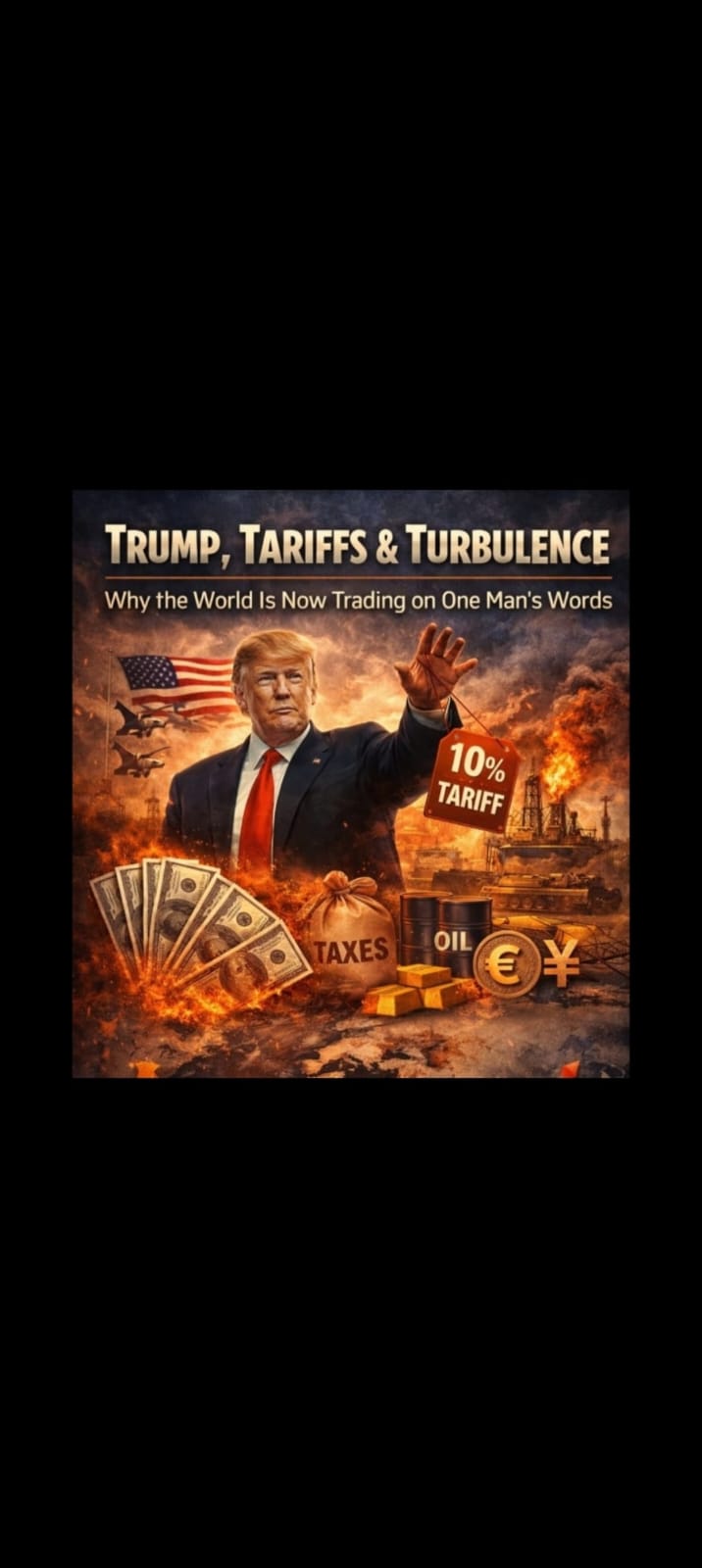
Trump, Tariffs & Turbulence - Why the World Is Now Trading on One Man’s Words