Address
804, 805, 8th Floor, Tower B4, Spaze I Tech Park Sec-49, Sohna Road, Gurgaon-122018 , Haryana, India.
Download Alpha Portfolio App


Download Consolidated Portfolio App
Social Media



By Alpha Research
Jul 10, 2020


‘Economic progress in a capitalist society means turmoil’ – Joseph Schumpeter
The mayhem caused in the world markets by the pandemic Covid-19 is being labelled as a major economic disruption – unprecedented to the human race alive on our planet.
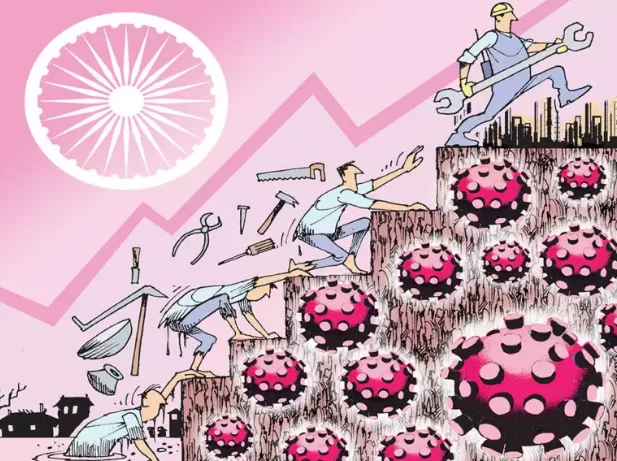
The economic growth rates are expected to tumble sharply to negative for most major economies of the world. But readers, the perspective is a mind game. Is this really just an economic disruption? Or, is there a bigger picture to this disruption – creative destruction?
Creative destruction is an essential fact about capitalism as affirmed by the renowned economist Schumpeter. Creative destruction has been fundamental to rapid economic growth – including structural changes. The new technology, ideas, business models have to replace the incumbent for the growth engine to leap ahead.
The current world scenario can easily be termed as a pandemic triggered creative destruction – destroying old products, techniques, business models, ways of thinking, etc and leading to an emergence of a totally new revived business models, products, technologies, etc. In fact, the current pandemic situation may lead to a major shift in the world economic order.
The existing covid-19 caused crisis has led to disruption in various sectors of the Indian economy. The outlook for the entire markets – both equity and debt has undergone a change. The sectors have been impacted differently and several opportunities have been created for the investors.
Conventional businesses with relatively low entry barriers are highly vulnerable. Fundamentally, strong companies can survive in this era of disruption by proactively acknowledging and investing in disruptive innovation. Investors need to pay attention to these trends, intensifying turmoil in the economy and devote time and money for harnessing returns.
The ‘unicorn’ and ‘decacorn’ phenomenon of highly valued disruptive start-ups indicates stepping up of turbulence. 18 Indian unicorns have emerged across different sectors and industries.
Recently, Accenture, in its report for India, published ‘Disruptability index’, which measures the current level of disruption, and susceptibility to future disruption. The research found that 44 percent of companies are currently experiencing disruption, and 38 percent are susceptible to future disruption.
Readers, several trends are the driving force behind the creative destruction, ranging from the massive disruption in retail, increased digitalization, the rise of the software-enabled online platforms to the emergence of clean energy and increased globalisation.
Disruptions encompassing technological advances, cloud computing and artificial intelligence indicate further turmoil enabling quick scaling up of operations, global reach and no geographical limitations in expansion.
Globally, the energy sector has witnessed a sharp decline in its weight in the index, as cleantech is gaining prominence and oil prices are descending. Increased investment in renewable sources has for the first time exceeded the traditional energy resources i.e. fossil fuels. The S&P Global Clean Energy index confirms this trend with a one-year total return of 19.20% in contrast to -38.27% by the S&P Global 1200 Energy Index, as on 3 July 2020. India is no exception to this trend.
This understanding of disruptive innovation can be a powerful tool in the hands of the investors, for making investment decisions. Disruption is the new constant. Thanks to technology, the speed of change is accelerating and the breadth is also widening. Identifying business models and companies which pre-empt disruption and take advantage of it will be an important determinant to earn abnormal returns.
This is the time for a patient investor to look for sectors with new emerging business models and fundamentally strong companies for sustained advantage.
Dr. Tarunika Jain Agarwal Ph.D.
Alpha Research