Address
804, 805, 8th Floor, Tower B4, Spaze I Tech Park Sec-49, Sohna Road, Gurgaon-122018 , Haryana, India.
Download Alpha Portfolio App


Download Consolidated Portfolio App
Social Media



By Alpha Research
Feb 28, 2022


It’s wartime. Russia has begun military operations in Ukraine. My heart goes out to all those who are personally being affected by this geopolitical mayhem.
Historical use of the term “geopolitics” expresses states’ practice to control and compete for territory. The risk of wars, coups, and other military clashes cannot but affect financial markets. When we witnessed Russian troops on Ukrainian borders, the markets globally tanked. Moscow Stock Exchange on Thursday suspended trading amid tensions.
But now, the interconnectedness between countries and economies has made the world a global village. A war fought more than 5000 kms away has a sentimental impact on Indian markets too. Benchmark indices in Tokyo and South Korea fell 2%, and Hong Kong and Sydney lost more than 3%. India’s Volatility index surged past 30 per cent to a 20-month high. The very next day, the markets rebounded with clarity on the severity of sanctions imposed on Russia following the invasion.
Moreover, this geopolitical risk plays a vital role not only in equity but also in corporate bonds, treasuries, or currency markets. Thus, the world financial markets are experiencing extreme volatility on the investments front. The Indian market mirrored the global sentiment.
Nonetheless, while this invasion is devastating impacts on the humanitarian front, another question of interest from an investor’s angle is how this geopolitical uncertainty holds for him.
The warlike situation has spillovers to the energy market. Also, precious and rare metals like gold attract attention, especially in the context of their risk-hedging properties. One of the major concerns was the energy sector, which is not affected by the sanctions announced till now.
Oil prices after touching the peak of $100 are back below the mark (After all, after Saudi, Russia is the second-largest exporter of Oil and largest exporter of Natural Gas). Black Sea is an essential route in the global supply chain. Russia is one of the world’s biggest suppliers of metals used in car manufacturing, such as nickel or palladium.
All in all, the cost of living would increase across the world, which is already witnessing rising inflation and interest rates, with the end of easy money while recovering from the pandemic. However, the situation remains fluid, but all these factors considered in conjunction with the Russia Ukraine tension would negatively impact living standards almost everywhere.
In the Indian context, the impact is likely to be visible on sectors heavily dependent on imports in the current situation. Oil-producing companies, ONGC and Oil India, may find a place on investors’ radars. The same is true for the metal and chemical sectors.
“The time to buy is when there’s blood in the streets”, used to say, Baron Rothschild, one of the wealthiest men of all time.
It is worth remembering that the markets more often overreact to geopolitical risks. Estimating risks and probabilities, investors rely on various mental shortcuts or so-called heuristics to save time and effort. They tend to overweight certain types of information, underweight, or entirely ignore others. The easier an occurrence of some phenomenon comes to mind, the more probable it appears. In the present situation, broad media coverage, recency and emotional affect, for example, amplify subjective availability, increasing the estimated probability of an event.
Consequently, the changes in news sentiment may substantially affect the perceived risk and results of geopolitical events. This phenomenon appears to be particularly strong with fearsome risks, that is, those that stimulate strong emotional responses such as anxiety or fear. A surge in the news coverage of a military conflict or terrorist act nearby leads to an elevated subjective risk, exceeding the objective one.
The change in perceived risk is accompanied by additional selling (buying) pressure as investors move their capital from riskier to safer markets, leading to price undershooting (overshooting) relative to the stock’s fundamental value. Subsequently, the resulting mispricing is corrected via a price increase (decline) in the following period.
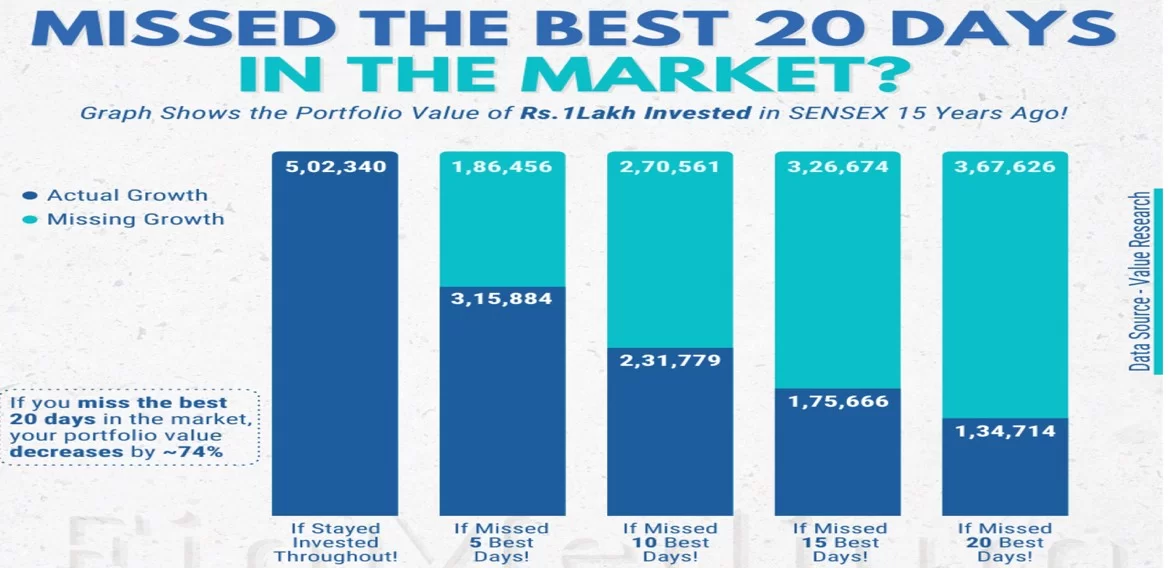
Let the investor in you look at the good in the bad news. Typically, foreign wars have a limited sustained impact on the economic growth trajectory and financial market. Take this market correction as an opportunity to invest. Continue the SIP/ STP in the dip, buy value picks with reasonable valuations, think long term and stay invested. Stay diversified and disciplined to your investment frequency. Don’t panic; breathe slowly and think clearly.
So, my dear readers, I would conclude with the words of Peter Lynch
“The trick is not to learn to trust your gut feelings, but rather to discipline yourself to ignore them. Stand by your investments as long as the fundamental story behind the same hasn’t changed. People who succeed in the investing also accept periodic losses, setbacks, and unexpected occurrences.”
Best Regards
Dr. Tarunika Jain Agarwal Ph.D.
Alpha Research
More From Blogs