Address
804, 805, 8th Floor, Tower B4, Spaze I Tech Park Sec-49, Sohna Road, Gurgaon-122018 , Haryana, India.
Download Alpha Portfolio App


Download Consolidated Portfolio App
Social Media



By Alpha Research
Jul 06, 2022


The fears about impending high inflation, stagflation, recession, the aftermath of the Russo-Ukrainian war, supply chain disruption, rising energy costs, and the Fed’s interest rate hike are lingering in every corner of the world.
As a result, every government, economic research house, and media is heated up with discussions on reflation or soft-landing measures by the respective governments.
All these economic developments may appear to be standalone concerns, but from a macroeconomic point of view, all are very closely connected.
For example, the Russo-Ukrainian war triggered supply chain disruption and rising energy costs, leading to high inflation.
The increased inflation also resulted from the excess liquidity provided by the Fed to hold the economy from a recession during the Covid pandemic. And to curb the high inflation, the Fed was compelled to hike the interest rate.
Heated discussions are going on over whether the rising interest rates would lead to stagflation or recession and will the government roll out reflation or soft-landing measures to save the economy.
This article puts forward a few probable economic conditions and compares them to help an investor make wise investment decisions during these turbulent times.
Stagflation
Stagflation, a combination word for economic stagnation and inflation, is an economic condition with higher inflation, slower economic growth, and rising unemployment rates.
It presents the government with a dilemma: any monetary policy or actions intended to bring down inflation may slip into stagnation, increase unemployment and lead to other economic issues.
In May, the Fed hiked the interest rate by 0.5% to bring down inflation. But contrary to the expectations, the inflation soared to 8.6% from 8.3%. Again, in June, the Fed aggressively hiked the interest rate by 0.75% with no positive outcomes.
An aggressive interest rate hike may appear to be a soft-landing measure, but, in fact, it is not. Instead, it is just a tip of an iceberg called recession with high inflation; that is, stagflation.
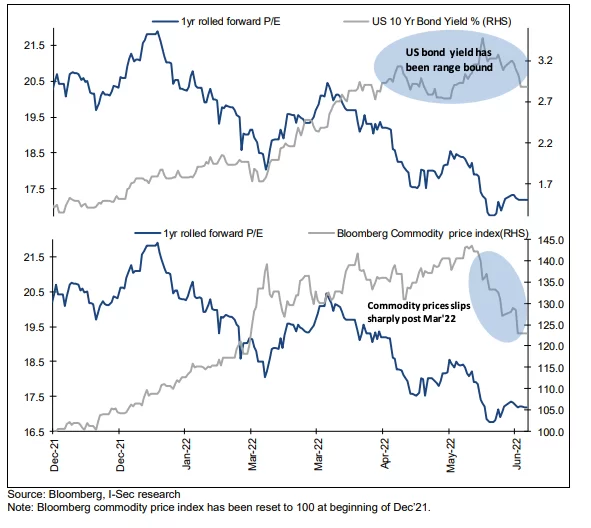
Bond yields would rise in an economy moving through the stagflation phase, making equities less attractive as bears hold their grip on the stock market. However, since bond and stock prices fall, investors are presented with an excellent opportunity for long-term investment.
Recession
Recessions are characterized by a sluggish economy, rising unemployment rates, falling retail sales, and corporate profits. However, recessions are an inevitable element of an economic cycle and are the regular rhythm of the expansion and contraction of an economy. In fact, we are accustomed to similar economic cycles.
During an economic slowdown, the Reserve Bank of India (RBI) pumps liquidity via interest rate cuts to boost the economic activities solely based on demand and supply. And after economy expands, RBI hikes the interest rates to suck the liquidity from the system and let the steam out of the inflationary pressure.
During the 2000 dot-com bubble and 2008 global subprime crisis, the government did the same to save the economy from slipping into recession. This has been the only way out from every historic financial crisis when the equity market would fall, but bond prices would rise.
But, this time, the situation is a little different, and the inflation data post-Corona pandemic makes all the difference.
The inflation rate wasn’t high during an earlier financial crisis like Dotcom or the subprime mortgage crisis. So, the government could easily tame it with an interest rate hike or cut. But, the high inflation during the post-pandemic era is compelling the government to an excessive interest rate hike. It may push our economy into a slump or terrible stagflation territory.
Two Overoptimistic Scenarios
If you believe in luck and hold high hopes for our economy, you can wish for reflation and a soft landing. The magic wand of reflation will bring a ceasefire to the Russo-Ukrainian war, restore the supply chain, lift the Zero CoVID policy, and boost global business activities. Then, all you could wish for is a stable inflation rate and a strong stock market rally.
Soft landing is another optimistic scenario, which one can wish for. During a soft-landing attempt, government showcases a brilliant ‘balancing act’ in economists’ terminology. The interest rate is slowly and carefully raised at appropriate times without letting the economy slip into recession.
As a result, a modest recovery in the equity market and gradual improvement in bond yields may happen. The bond prices may take a short-term beating, but higher accrual coupon rates would compensate for the fall of bond prices and improve the overall return on debt instruments.
The Best Investments Are Made During Worst Times
Despite every economic recovery attempt by the government, there lays a bumpier road ahead for us. During a soft landing, chances are higher for the government to fail, creating tantrums in the economy, and tossing it into stagflation.
Everything depends on the inflation rates’ up, down, and stable states. It determines which direction our economy ship will take in the sea of uncertainty. Anyway, whichever course it may take, investment opportunities are abundant at every corner. Remember that the best investments are made during the worst times. So you should be ready with the gun powder to fill your investing cannon and take the long shot at the right time.
Best Regards
Akhil Bhardwaj
Alpha Research