Address
804, 805, 8th Floor, Tower B4, Spaze I Tech Park Sec-49, Sohna Road, Gurgaon-122018 , Haryana, India.
Download Alpha Portfolio App


Download Consolidated Portfolio App
Social Media



By Alpha Research
Feb 04, 2021


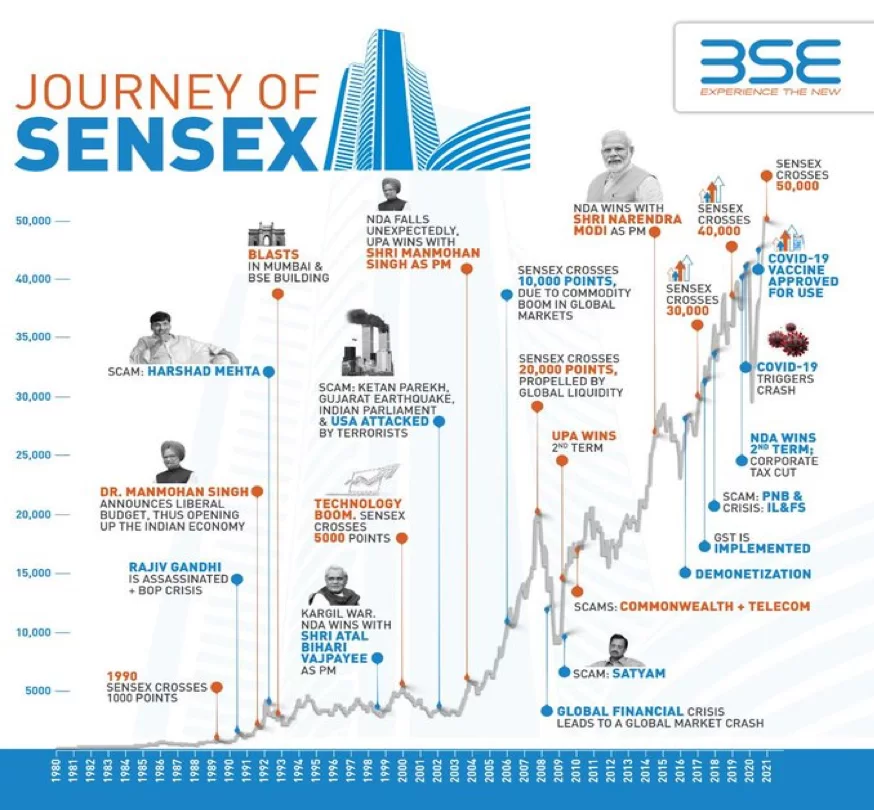
Union Budget 2021 presented by Finance Minister on 1st February, 2021 has created a bang on the stock market. Sensex has moved up from 46388 to 50255 which is a growth of 7.2%. Budget has definitely created a huge euphoria in the stock market.
In this article, we are not going to take you through the details of Union Budget as same has been already covered exhaustively in newspapers, media etc. However, we will tell you about important implications of budget, what are the risks, how it is going to affect various investment and what is the suggested strategy for investors.
Union Budget of 2021 is the first budget of the decade and the first after once-in-a-century global pandemic. It holds importance because it lays roadmap for recovery of economy after contraction of 2020.
Positive Implications:
1) Privatization of Public Sector Banks – Government has decided to privatize two public sector banks. After 51 years of bank nationalisation, the government has finally admitted that it should not be in the business of running all public sector banks. According to us, this is going to be the single biggest reform from this budget.
On 16/1/2021, through an article, we had written about the expected Tsunami of bad loans in 2021. We had talked about solution to this problem being either privatization of banks or capitalization of banks by Government.
Privatization of public sector banks is in the right direction because it will help the banks to raise money from the market on their own and it will reduce their dependence on Government for money. Also, this will decrease the financial burden on Government and will also help in credit offtake from the banks for investment in the economy.
Intent of privatization is very good. The challenge will be in implementation of this reform. Government will see resistance from the union of bank employees and also from opposition political parties.
2) Increase in Capital Expenditure – Government has decided to increase capital expenditure by ~26% in comparison to last year. Government expenditures are of two types – Revenue and Capital. Revenue expenditure is for the normal running of the Government services, interest charges on debt, subsidies and so on. Capital expenditure is the part of spending that goes into the creation of assets like roads, bridges, dams, railway lines, airports etc.
Capital expenditure is considered to be of good quality. As per RBI study, capital expenditure has a multiplier effect of 3.25 which means that every rupee spent on capital formation induces an increase in the GDP output by Rs. 3.25.
Following chart shows historical trend of revenue and capital expenditure:
The above chart shows that revenue expenditure will reduce from 87.3% in 2020-21 to 84.1% in 2021-22 and capital expenditure will see meaningful increase.
The decade of 2011-20 was one of the slowest for India. One of the primary reason for same is that after the great financial crisis of 2009, India decided to provide consumption stimulus to economy in the form of MGNREGA (Mahatma Gandhi National Rural Employment Guarantee Act ), farm loan waiver etc. The trend continued for many years despite economy coming out of the woods. Because of continued higher spending on consumption, the investment for new assets creation was impacted and accordingly employment also took a hit. Also, this was one of the reason for consumption stocks doing do so well since 2009.
The budget of 2021 plans to reduce consumption expenditure towards MGNREGA by 34.5% and in PMAY (Pradhan Mantri Awas Yojana) by 32.1%.
With expected revival of capex cycle, companies connected with infrastructure and domestic manufacturing are expected to do well. Companies related to cement, steel, metals etc are hopefully going to deliver good return going forward.
3) No significant change in direct and indirect taxes – Due to Covid stress on economy, everyone was fearful that Government will increase tax in the form of Covid Cess, Wealth Tax or Inheritance Tax. Thankfully, Government has not made any significant changes in personal and indirect taxes. This has led to better consistency and clarity.
We have always believed that Government should reduce taxes as this will help to reduce black economy, increase tax coverage & buoyancy, increase consumption and reduce migration of HNIs out of India. Government has not reduced tax but thankfully they have not increased tax.
From 1st April 2021, Employee provident fund contribution of more than 2.5 Lacs per annum will attract tax on interest income. This was tax exempt till now. This has made EPY relatively less attractive. However, pre tax return of 8.5% and post tax return of ~5.7% is still better than other fixed income avenues. So investors can continue with the same. However, its suggested to revisit your asset allocation policy and plan for incremental investment in EPF & Equity.
For ULIP Insurance policy with premium of more than 2.5 Lacs, the maturity proceeds will now become taxable. This makes Insurance for investment unattractive. Insurance is always good for risk coverage and accordingly term plan should be taken for same. Investors are suggested to avoid using Insurance for investment.
Important announcements but needs to be watched:
1) Creation of Development Finance Institution (DFI) – Government has announced creation of a Development Finance Institution (DFI) for infrastructure financing. The plan is to lend Rs 5 lakh crores over the next three years through this DFI.
One of the key reason for pile up of bad loans in banks is that they were made to lend to long term Infrastructure projects. There was asset liability mismatch. Banks get money through short term deposits, so they are not suitable for lending to infrastructure projects which have tenure of 10-20 years. Banks are more suitable for retail and working capital lending.
DFI is a good solution for infrastructure financing but the problem is that in India we have tried DFI experiment in the past and have failed miserably. IDBI, IDFC, IFCI and IL&FS are some of the DFIs which have failed.
A big problem with DFIs is that they suffer from lending due to Crony Capitalism (Favourable lending due to advantageous relationship between business houses and government officials).
So what is special about the proposed new DFI. As per finance minister, the new DFI will be professionally managed. We are going to watch this carefully and hope that it indeed gets professionally managed.
2) Creation of Asset Reconstruction Company or Bad Bank:
Government has announced creation of Asset Reconstruction Company(ARC) which will be set up to take over the existing bad loans (NPAs) of PSU banks, manage them and sell them to alternate investment funds and other potential investors. The details about creation of this ARC is yet to become available.
This can be a good move if new ARC can have right professionals who can focus on making high recovery from NPAs. This can also free up employees in PSU Banks to focus on better lending. Again, right implementation of ARC is they key here.
Government Borrowing Plan:
In 2020-21, the tax revenue collection has significantly fallen and to finance the expenditure, Government has increased the borrowing significantly. The fiscal deficit for 2020-21 is projected to be at 9.5% of the gross domestic product (GDP). This is the highest fiscal deficit figure between 1970-71 and now. For 2021-22, the fiscal deficit is projected to be at 6.8%. (Higher than expected)
Fiscal Deficit as percentage of total Government expenditure
The above charts shows that out of total money spent by Government, ~54% will be borrowed money for 2020-21 and ~43% for 2021-21. Long term average is around 35%.
Supply of the bonds in the market for borrowing by Government:
The above chart clearly shows huge increase in borrowing by Government through bonds since 2020. Ideally, this should have led to increase in interest rates. But this has not happened due to support from RBI in the form of loose monetary policy and printing of money to buy Government Bonds.
Movement of Interest rates in future will depend on support from RBI. As economy recovers, RBI will be gradually winding up the monetary support which it had given in 2020 due to Covid crisis. However, we feel that RBI will continue to support Government borrowing program and most probably will ensure that there are no sudden spikes in interest rates. High Interest rates will increase interest cost for Government and will further lead to higher fiscal deficit.
We will get more visibility about RBI support in the next Monetary Policy Committee (MPC) meeting which is scheduled to be held on 5th February 2021.
We need to be careful about following Risks:
Impact on Equity and Debt:
According to us, the budget is a good plan on paper which has been made with good intentions. The key to success is smooth execution of the plan. If the plan is implemented properly and without delay then we can see a good boost to the GDP growth of India and significant increase in corporate earnings.
Equity:
Debt:
We are keeping our fingers crossed and hoping that the proposed plans in budget are implemented.
Best Regards
Dr. Mukesh Jindal CFA, CFP, CAIA, Ph.D.