Address
804, 805, 8th Floor, Tower B4, Spaze I Tech Park Sec-49, Sohna Road, Gurgaon-122018 , Haryana, India.
Download Alpha Portfolio App


Download Consolidated Portfolio App
Social Media



By Alpha Research
Apr 23, 2025


Global capital is on the move. Old assumptions are being questioned. Global investing followed an unspoken rule for decades: Put your capital in America.
This belief formed the bedrock of asset allocation decisions for central banks, sovereign wealth funds, and institutional investors alike. It was built on institutional strength, the dollar’s dominance, and America’s central role in trade and capital markets.
We are now living through what evolutionary theorists call ‘Punctuated Equilibrium’—long periods of stability interrupted by sudden shocks that rapidly reorder the system. And in global capital markets, that punctuation is happening now.
In 2022, when the U.S. froze over $300 billion of Russia's central bank reserves, the dollar's neutrality was questioned. It was a watershed moment, from stability to shock - the first crack in the dollar's dominance. If it can happen to Russia, who’s truly safe?
The reaction was a surge in gold reserves and talk of de-dollarization. This was the first punctuation in a decades-long equilibrium. Second, U.S.-China decoupling and growing strategic bifurcation have prompted many economies to seek systemic alternatives.
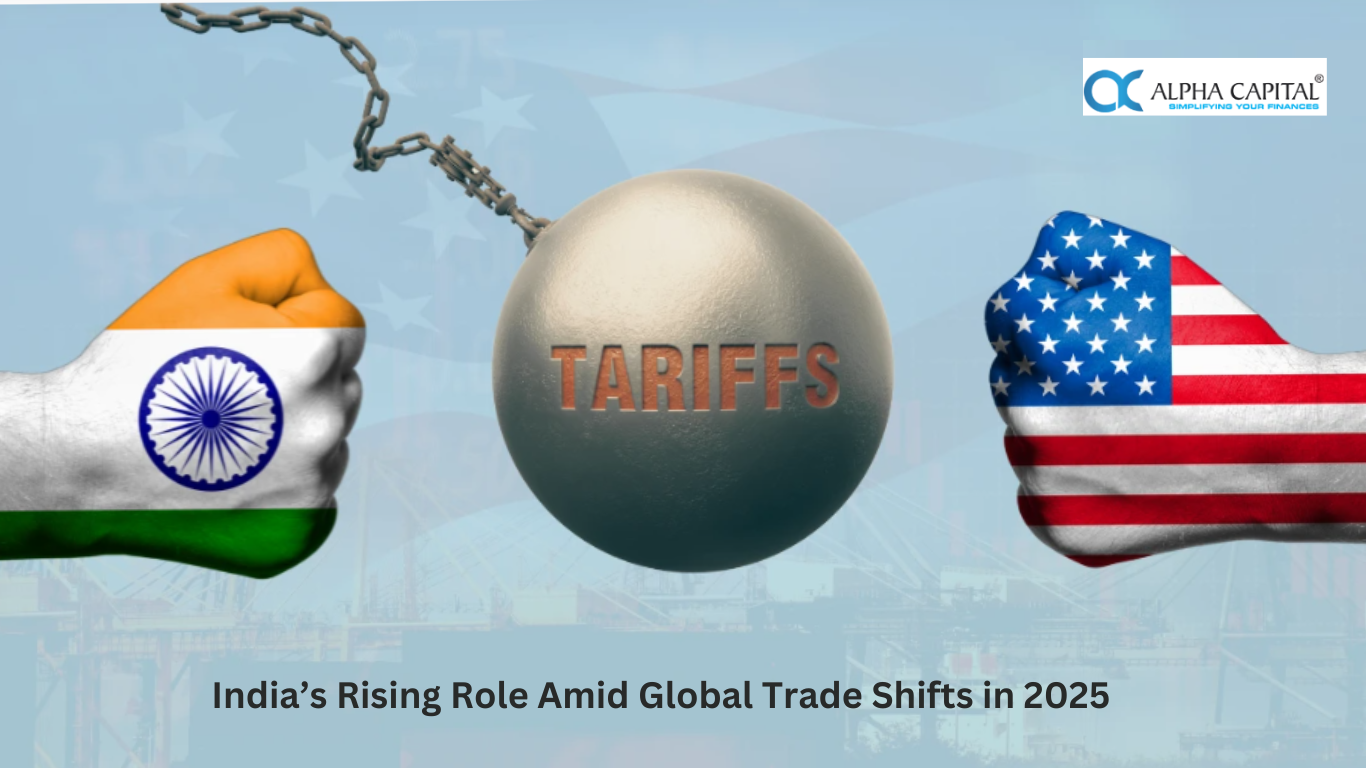
Fast forward to today, the second Trump presidency with an overt tariff-first agenda, the world prepares for more ruptures. For instance, U.S. tariff rates have jumped from ~2.5% to over 10%, and every 1 percentage point rise knocks ~0.1% off U.S. GDP, and the U.S. debt trajectory spirals upwards.
The question on everyone’s mind: If economic policy becomes so unpredictable, how much exposure is too much? This isn’t about abandoning America. It’s about not betting everything on it.
Sovereign investors are trimming U.S. overweight, Central banks are increasing gold and non-dollar reserves, and equity flows are rotating out of U.S. Big Tech toward undervalued growth markets. This is how punctuated equilibrium works: the shock creates a new normal.
Amid this realignment, India stands out not by accident but by design, with
India's own investment evolution is a punctuated leap. Two decades ago, Indian portfolios were built on FDs, gold, and property. Equity was intimidating. But then came our own punctuation:
We moved from being risk-averse to risk-aware, from wealth preservation to wealth creation. This isn’t just gradual evolution. It is a leap—a reconfiguration of investor behaviour, access, and confidence.
The numbers tell a powerful story: ₹25,926 crores in SIP inflows in Mar 2025, an all-time high and ₹66 lakh crore in AUM — up 44x since 2005.
With household participation still below 5%, the runway is immense. Today, India’s mutual fund AUM is ~22% of GDP. In the U.S., it’s 120%. That gap isn’t a weakness—it’s the opportunity.
By 2047, India’s MF AUM is projected to exceed ₹280 lakh crore, 6x growth in the number of investors, and an AUM-to-GDP ratio breaching 100%. This is the “S-curve” of adoption in motion. We’ve passed the early trust phase and are now at the acceleration point.
What should you do as the world rebalances?
Dear readers, we are not on the brink but amid a system-level reset. A new equilibrium is not just on the horizon but is already being born. The rules of global capital are not just changing but evolving.
As the global system reconfigures, India is not just emerging but solidifying its position as both a beneficiary and an alternative. The spotlight is not just shifting but firmly fixed on the changing dynamics of global investing. The time to adapt and anticipate is now.
Let’s not merely survive this punctuation. Let’s profit from it. Don’t Just Adapt. Anticipate!
Best Regards
Dr. Tarunika Jain Agrawal Ph.D.
Alpha Research
Disclaimer: The perspectives provided reflect our expectations of the economy, market, and investments, which may or may not materialize. Investors are encouraged to conduct their own due diligence before investing.