Address
804, 805, 8th Floor, Tower B4, Spaze I Tech Park Sec-49, Sohna Road, Gurgaon-122018 , Haryana, India.
Download Alpha Portfolio App


Download Consolidated Portfolio App
Social Media



By Alpha Research
Apr 07, 2025


As we turn the page to a new financial year, the global and Indian investment landscapes are at an inflection point. Trade tensions, sticky inflation, and economic realignment are reshaping strategies across markets.
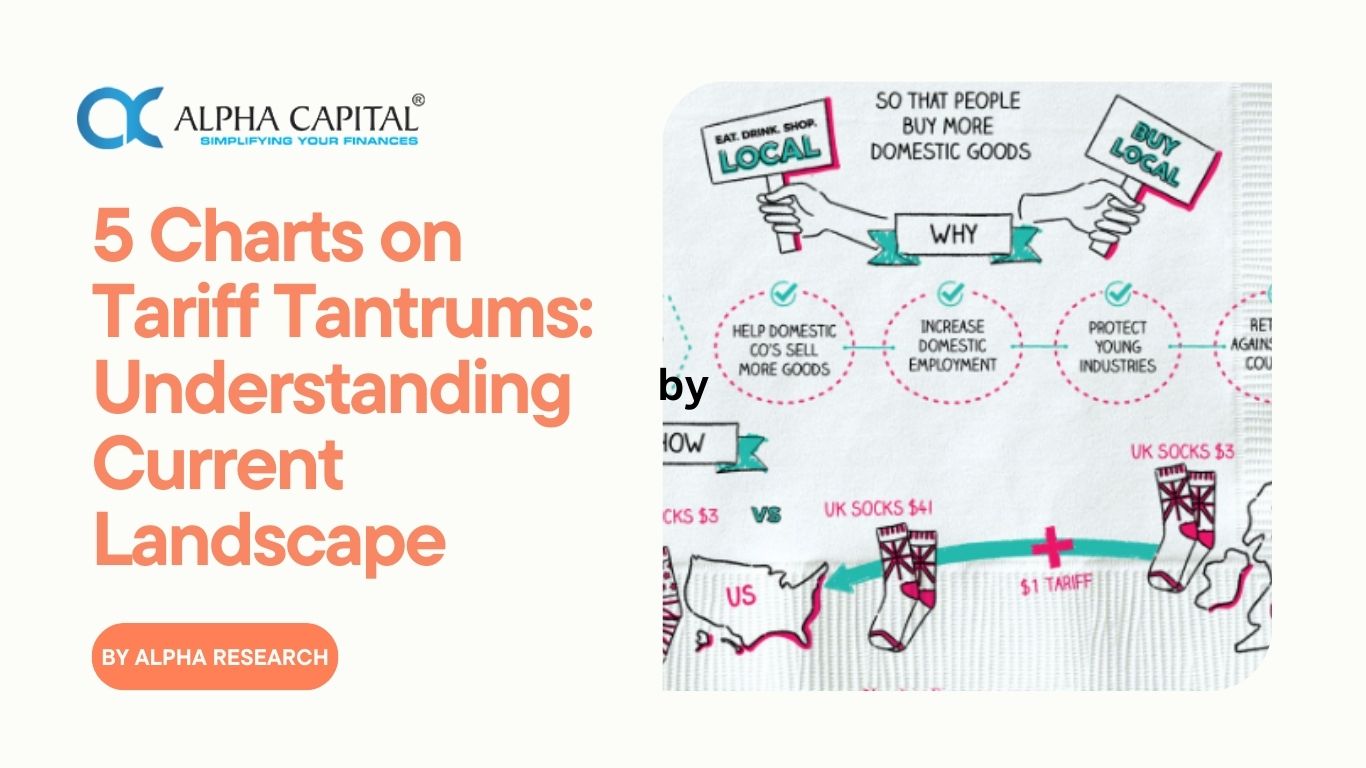
Markets are on edge again—and this time, it’s tariffs. The U.S. has rolled out fresh duties on a range of imports—raising global concerns about inflation, trade disruptions, and economic slowdown.
The implications are far-reaching with disrupted global trade flows and U.S. inflation that could rise by 0.3% to 0.5% over the coming months. Fed Chair Jerome Powell’s remarks make it clear: the impact of these tariffs could be both inflationary and growth-sapping, echoing patterns we've seen before.
Tariff imposition as an economic weapon has a long and checkered history, and its lessons remain relevant today. We’ve been here before. Let’s unpack the lessons from past tariff episodes—and what investors should do today.
Consider the Smoot-Hawley Tariff Act of 1930, enacted during the depths of the Great Depression. In an attempt to protect domestic industries, the U.S. levied steep tariffs on over 20,000 imported goods. Instead of recovery, the result was global retaliation, a 66% collapse in global trade by 1934, and a dramatic fall in U.S. exports—over 60% between 1929 and 1933. Rather than shielding the economy, the policy deepened and prolonged the Great Depression, highlighting that trade wars rarely deliver prosperity; when global trade seizes up, everyone loses.
Fast-forward to the 2018–2019 U.S.-China trade war under the Trump administration, where $360 billion worth of tariffs on Chinese goods triggered a swift Chinese retaliation. American consumers saw prices rise across electronics, clothing, and machinery, while manufacturers—especially small and medium enterprises—faced input cost inflation and tangled supply chains. Financial markets responded with heightened volatility: the S&P 500 corrected sharply in Q4 2018, falling 13.5%. This uncertainty prompted the Federal Reserve to halt its rate hikes and shift to a rate-cutting stance in 2019, underscoring how geopolitical tensions can hijack monetary policy.
Even more targeted tariff actions—like the 2018 steel and aluminum tariffs of 25% and 10%, respectively—offer lessons. Though they briefly boosted U.S. steelmakers, the broader economy paid the price. Input costs surged for auto and construction industries, trade deficits remained largely unchanged, and the stock market penalized industrial and auto stocks. Inflation ticked higher, sapping consumer sentiment.
In today’s context, tariffs targeting green energy and EV components could produce similar effects: temporary relief for some import-substituting sectors, like domestic semiconductors or Indian/ASEAN-based suppliers, but broader downstream inflation and demand destruction. Investors in 2025 would do well to remember that while protectionist measures might offer selective gains, they often come at the expense of economic stability and global cooperation.
What’s Similar in 2025?
What’s Different in 2025?
There is no doubt that the global economy is entering a slower but more volatile phase, with trade wars potentially leading to cost-push inflation and supply-side disruptions. While history shows that tariffs bring more pain than gain, especially for consumers and downstream businesses, markets tend to recover once policy clarity emerges and monetary easing resumes.
How does an investor playbook look for 2025?
My dear readers, don’t panic. Tariffs create noise but rarely derail long-term returns. The Bottom line is what history reminds us—trade wars hurt, but they pass. Stay the course with a smart, diversified portfolio. Smart asset allocation, sectoral rotation, and tactical plays in gold and international markets can help preserve and grow wealth.
Final Thought:
Tariffs may pass, but fundamentals will prevail! Let volatility create opportunity—not anxiety!
Best Regards
Dr. Tarunika Jain Agrawal Ph.D.
Alpha Research
Disclaimer: The perspectives provided reflect our expectations of the economy, market, and investments, which may or may not materialize. Investors are encouraged to conduct their own due diligence before investing.